
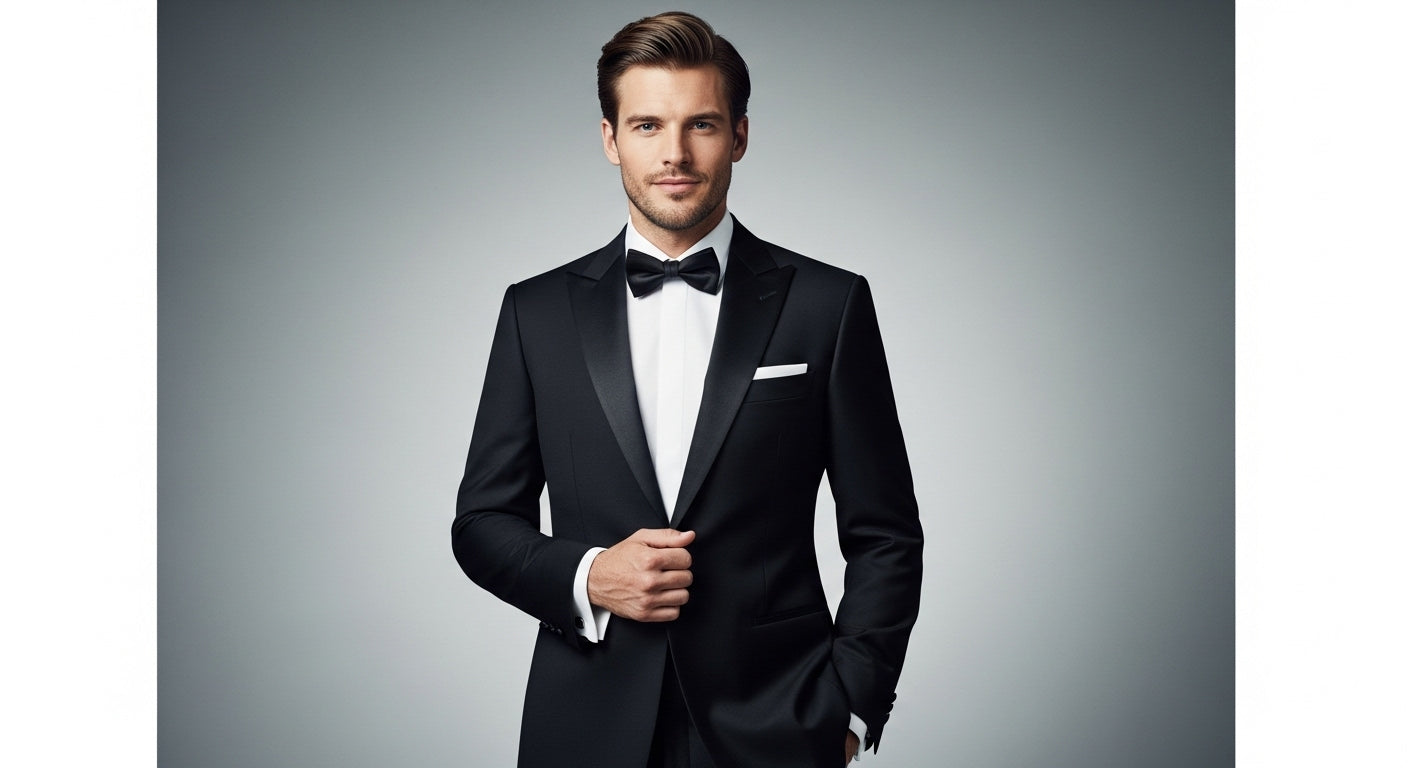
Key Takeaways:
- Black tie dress code follows clearly established rules that create an ideal formal silhouette
- Choose jet black or midnight blue fabric for your tuxedo, with jet black being the most versatile option
- Tuxedo jackets should feature peak or shawl lapels with satin facing, never notch lapels
- Formal trousers include satin stripe details, no cuffs, and traditionally no belt loops for suspender wear
- White evening shirts with pleats and French cuffs are essential, requiring shirt studs instead of buttons
- Bow ties are the only acceptable neckwear choice, with butterfly and semi-butterfly being classic styles
- Waist coverings include either a black waistcoat or cummerbund to create visual flow from shirt to trousers
- Footwear options include patent leather pumps or highly polished Oxford shoes in black
- Accessories should remain minimal, with optional pocket squares and boutonnieres for added elegance
How to Wear Black Tie: Understanding the Foundation of Formal Elegance
How to wear black tie properly is surprisingly straightforward once you understand the fundamental principles. Unlike business casual or casual wear where rules vary dramatically, black tie dress code follows clearly established guidelines that have evolved over 120 years. These time-tested principles create the ideal silhouette for formal occasions.
The beauty of black tie dress code lies in its simplicity. When you see men wearing green tuxedos at high school proms or complete black outfits in Hollywood films, they're straying from classical black tie traditions. True formal elegance comes from understanding why these rules exist and how they work together to create a sophisticated appearance.
What makes black tie different from other dress codes? The answer lies in its precision. Every element serves a specific purpose in creating visual harmony. From the tuxedo jacket lapels to the formal trouser construction, each component has been refined to achieve the perfect balance of formality and style.
Are you ready to master the art of formal dressing? This comprehensive guide will walk you through every essential element, ensuring you feel confident at any black tie event. Whether you're attending your first formal occasion or refining your existing knowledge, these principles will serve you well.

Tuxedo Rules and Color Guidelines for Classic Black Tie Events
Tuxedo rules begin with fabric and color selection, which forms the foundation of proper formal wear. Classical black tie maintains strict color guidelines that have proven effective for over a century. The primary choice remains solid jet black, which provides the strongest contrast against a white dress shirt and creates the most dramatic formal appearance.
Midnight blue represents the traditional alternative to jet black, though it's rarely seen in modern formal wear. This deep navy shade was historically preferred because it appeared more intensely black than actual black fabric under artificial lighting. However, midnight blue tuxedos typically require custom tailoring, making them a consideration for second or third formal wear purchases rather than initial investments.
Why do these color restrictions exist? The answer lies in the visual impact created by high contrast. The stark difference between deep black fabric and crisp white shirting creates clean lines that define the silhouette. This contrast principle drives every aspect of men's formal wear construction and styling.
Modern variations and colored tuxedos may appear fashionable, but they compromise the timeless elegance that makes black tie appropriate for the most sophisticated occasions. Stick with jet black for versatility and classic appeal that never goes out of style.

The Tuxedo Jacket: Peak Lapels and Essential Style Elements
The tuxedo jacket distinguishes itself from regular suit jackets through several key design elements that enhance formality. Peak lapels or shawl lapels are the only acceptable choices for formal wear. These upward-pointing lapel styles create vertical lines that elongate the torso and add visual interest to the silhouette. Notch lapels, common on business suits, appear too casual for black tie occasions.
Single-breasted jackets remain the recommended choice for most men due to their versatility and familiarity. The single-breasted style fits more body types comfortably and presents a cleaner line when buttoned. Double-breasted options work excellently for second or third tuxedo purchases, offering variety while maintaining proper formality standards.
Lapel facing details set formal jackets apart from everyday wear. The satin or grosgrain facing on lapels adds subtle shine that catches light and creates visual depth. This reflective quality complements the overall formal aesthetic and distinguishes the tuxedo jacket from standard suiting.
Vent construction follows specific guidelines for optimal appearance. Side vents or no vents work best for formal wear, allowing the jacket to hang properly when standing or walking. Center vents, while not deal-breakers, should be avoided when possible as they can disrupt the clean back line that formal wear aims to achieve.
Button coverage represents another formal detail often overlooked. Unlike regular suit buttons, formal jacket buttons are covered with the same fabric as the garment itself. This creates visual continuity and eliminates distracting reflective surfaces that might compete with the lapel facing for attention.

Black Tie Trousers: Stripe Details and Formal Trouser Construction
Black tie trousers feature distinctive satin stripe details that run down the outside seam of each leg. This stripe serves both aesthetic and historical purposes, creating vertical lines that elongate the legs while maintaining visual consistency with the jacket's satin lapel facing. The stripe placement mirrors military dress uniform traditions, particularly the blood stripe found on Marine Corps dress blues.
Formal trouser construction eliminates several elements common in everyday pants. Cuffs are absent from proper formal wear because they add visual weight to the bottom of the silhouette and reduce the clean lines that black tie aims to achieve. The hemline should break cleanly without fabric folding back on itself.
Belt loops represent another departure from standard trouser design. Traditional formal wear sits higher at the natural waist and relies on suspenders for support. This positioning creates better proportion by defining the waistline clearly and allowing the jacket to drape properly. Rental tuxedos often include belt loops for practical reasons, but custom-made formal wear typically omits them entirely.
Double pleats frequently appear on formal trousers, providing additional room through the seat and thighs while maintaining a clean front appearance when pressed properly. The pleats should lay flat against the body and create subtle vertical lines that complement the overall silhouette. These construction details work together to create the sophisticated appearance that makes tuxedo trousers appropriate for the highest levels of formality.
Fabric consistency between jacket and trousers defines the essence of formal suiting. Both pieces must be cut from identical material to maintain visual harmony and create the unified appearance that distinguishes a proper tuxedo from separates worn together.

Men's Formal Wear Shirts: White Evening Shirts and French Cuffs
Men's formal wear shirts must be solid white to create the necessary contrast against dark formal jackets. This color choice isn't arbitrary – the stark white provides visual separation between the dark tuxedo and your face, creating a frame that enhances your overall appearance. Any deviation from pure white compromises this essential contrast principle.
Pleated front construction distinguishes evening shirts from standard dress shirts. These pleats, typically measuring half an inch to one full inch in width, run vertically down the shirt front and add textural interest while maintaining the clean lines required for formal wear. While not absolutely mandatory, pleats represent traditional formal shirt styling that complements the sophisticated nature of black tie events.
French cuffs represent the preferred choice for formal occasions, requiring cufflinks to fasten properly. This construction adds an element of jewelry to the outfit while creating clean, finished lines at the wrists. Button cuffs work acceptably when French cuffs aren't available, but the traditional folded cuff creates superior visual appeal and maintains historical accuracy.
Shirt studs replace regular buttons on proper evening shirts, creating another opportunity to incorporate subtle metallic accents. These formal fasteners typically match cufflink metals – either gold or silver – and should coordinate with any watch worn. The studs create a cleaner front appearance than regular buttons while adding elegant details that enhance the overall formal presentation.
Metal coordination extends beyond shirt hardware to all visible accessories. If you choose to wear a watch with your black tie shirt, select a simple dress watch with a black leather band and understated face. Avoid sports watches or anything too bold that might compete with the formal aesthetic you're creating.

Bow Tie Styles: The Only Neckwear Choice for Black Tie Dress Code
Bow tie styles represent the only acceptable neckwear option for proper black tie dress code. Long neckties, regardless of color or pattern, belong with business attire rather than formal evening wear. The bow tie's horizontal orientation creates visual balance against the strong vertical lines of the tuxedo jacket lapels and trouser stripe.
Four primary bow tie variations offer subtle styling choices within formal wear guidelines. The butterfly style features the widest ends and creates the most traditional appearance, while the semi-butterfly provides a slightly more streamlined look. Straight-edge bow ties offer clean, geometric lines, and pointed-end styles add subtle visual interest through their angular shape.
Color selection for bow ties should remain conservative to maintain formal elegance. Solid black represents the safest and most versatile choice, coordinating perfectly with any black tuxedo while providing appropriate contrast against white shirting. This represents the one formal wear element where you might introduce subtle variation, but restraint serves you better than bold choices.
Self-tying versus pre-tied bow ties creates an important distinction in formal wear quality. Learning to tie your own bow tie ensures proper fit and creates the slight asymmetry that marks hand-tied pieces. Pre-tied options may appear more perfect, but they lack the authentic character that comes with personal attention to detail.
The bow tie serves as the focal point where all formal elements converge – the dark jacket, white shirt, and black neckwear create the classic formal triangle that has defined elegant bow tie styles for generations. This convergence point draws attention to your face while maintaining the sophisticated restraint that makes black tie appropriate for the most elegant occasions.

Black Tie Accessories: Waistcoats vs Cummerbunds for Perfect Silhouette
Black tie accessories serve a crucial function in creating visual continuity from the white dress shirt to the black formal trousers. Without proper waist covering, this transition creates too stark a contrast that disrupts the smooth flow of the formal silhouette. The waist covering bridges this gap and creates the streamlined appearance that defines elegant formal wear.
Waistcoats represent the traditional choice for formal waist covering. These formal vests typically feature three buttons and sit lower than regular suit vests, creating clean lines that complement the tuxedo jacket's cut. The waistcoat should never extend below the jacket hem and must coordinate perfectly with the tuxedo's fabric and color for visual harmony.
Cummerbunds offer an alternative waist covering option with historical roots in British colonial India. Originally called sashes, these pleated bands wrap around the waist and create horizontal lines that balance the vertical elements of formal wear. The cummerbund should sit snugly at the natural waist with pleats facing upward, following traditional wearing protocols.
Color selection for waist coverings should remain conservative to maintain formal elegance. Black represents the safest choice for both waistcoats and cummerbunds, ensuring perfect coordination with your tuxedo while avoiding any color conflicts. While rental companies offer various colors, sophisticated formal wear demands restraint and classic choices.
Additional accessories can enhance your formal appearance when chosen carefully. Pocket squares in white silk or linen add subtle elegance without overwhelming the outfit's clean lines. Fresh boutonnieres, particularly white or red carnations, provide traditional formal touches that complement rather than compete with the overall presentation. These black tie accessories should enhance your sophistication rather than drawing attention away from the harmonious formal ensemble you've created.

Tuxedo Shoes: Patent Leather and Oxford Options for Black Tie Optional Events
Tuxedo shoes complete your formal ensemble and must maintain the same level of sophistication as every other element. Two primary options work appropriately for black tie events: formal pumps and Balmoral oxfords. Pumps function essentially as formal slippers with minimal construction and clean lines, while Balmoral oxfords offer the familiar lace-up styling you recognize from business wear.
Patent leather represents the traditional choice for formal footwear due to its distinctive high-gloss finish. This pre-polished leather creates the reflective surface that complements other formal elements like satin lapel facing and shirt studs. Patent leather requires minimal maintenance since its shine comes from the manufacturing process rather than applied polish.
Regular leather oxfords serve as practical alternatives when patent leather isn't available or preferred. Choose high-quality leather that can achieve an exceptional shine through proper polishing techniques. The key lies in creating a mirror-like finish that approaches patent leather's reflective quality while offering greater versatility for other formal occasions.
Shoe selection should prioritize interchangeability with other formal and semi-formal outfits. Many men prefer oxfords that work equally well with business suits and formal wear, making them more practical investments. A perfectly polished pair of black oxfords can transition seamlessly between day and evening formal requirements.
Construction details matter significantly in formal footwear. Look for shoes with clean lines, minimal decorative elements, and superior craftsmanship that reflects the quality of your tuxedo. The shoes should complement rather than compete with your outfit, maintaining the understated elegance that defines proper formal wear. Whether you choose patent leather pumps or polished oxfords, your tuxedo shoes should enhance your sophisticated appearance without drawing undue attention to themselves.

Complete Your Black Tie Look with Custom-Tailored Excellence
Understanding how to wear black tie properly represents just the beginning of creating an exceptional formal appearance. While knowing the rules provides the foundation, achieving true elegance requires superior fit and craftsmanship that only custom tailoring can deliver. We believe every man deserves to experience the confidence that comes from wearing perfectly fitted formal wear.
Our custom tuxedo process ensures every element discussed in this guide works harmoniously together. From peak lapels with precise satin facing to trousers with properly positioned satin stripes, we craft each piece to your exact measurements and preferences. This attention to detail creates the flawless silhouette that distinguishes truly sophisticated formal wear from off-the-rack alternatives.
The difference becomes immediately apparent when you wear a properly fitted tuxedo. The jacket drapes naturally across your shoulders, the trousers sit perfectly at your natural waist, and every proportion works to enhance your physique. This superior fit eliminates the adjustments and compromises that rental formal wear often requires.
Ready to experience the difference that custom tailoring makes? Our online configurator guides you through every decision, from fabric selection to lapel styles, ensuring your tuxedo reflects both classic formal traditions and your personal preferences. Design your perfect formal wear today and join the ranks of men who understand that true style comes from attention to detail and superior craftsmanship.
Whether you're preparing for your first black tie event or adding to your formal wardrobe, we're here to ensure you look and feel your absolute best. Start designing your custom tuxedo today using our formal wear guide for men and discover what truly exceptional formal wear can do for your confidence and style.
Frequently Asked Questions
What is the difference between black tie and black tie optional?
Black tie requires a formal tuxedo with all traditional elements including peak or shawl lapels, satin stripe trousers, white dress shirt, and bow tie. Black tie optional allows guests to choose between formal tuxedo attire or a dark business suit, though a tuxedo remains the preferred choice for optimal appropriateness.
Can I wear a regular necktie with a tuxedo?
No, regular neckties are not appropriate with tuxedo attire. Bow ties represent the only acceptable neckwear choice for proper black tie dress code. The horizontal orientation of bow ties creates visual balance against the vertical lines of formal wear.
Is midnight blue better than black for a tuxedo?
While midnight blue has historical significance and can appear more intensely black under artificial lighting, jet black remains the most practical choice for most men. Midnight blue typically requires custom tailoring and works better as a second or third tuxedo option rather than your primary formal wear investment.
Do I need to wear suspenders with formal trousers?
Traditional formal trousers are designed to sit at the natural waist and work best with suspenders rather than belts. Custom-made formal wear often omits belt loops entirely. Suspenders create better proportion and allow the jacket to drape properly over the trouser waistband.
What accessories can I add to my black tie outfit?
Appropriate black tie accessories include white pocket squares, fresh boutonnieres like white or red carnations, and quality cufflinks and shirt studs. A simple dress watch with black leather band is acceptable. Avoid bold or flashy accessories that compete with the formal ensemble's sophisticated restraint.
Should I rent or buy a tuxedo?
Purchasing a well-fitted tuxedo provides better value over time and ensures consistent quality and fit. Rental tuxedos often include compromises like belt loops and center vents that detract from proper formal appearance. A quality tuxedo serves you well for many years and multiple formal occasions.
Can I wear patent leather shoes with other outfits?
Patent leather shoes work primarily with formal wear due to their distinctive high-gloss finish. For greater versatility, choose high-quality black oxfords that can be polished to achieve excellent shine for formal occasions while working appropriately with business attire as well.