
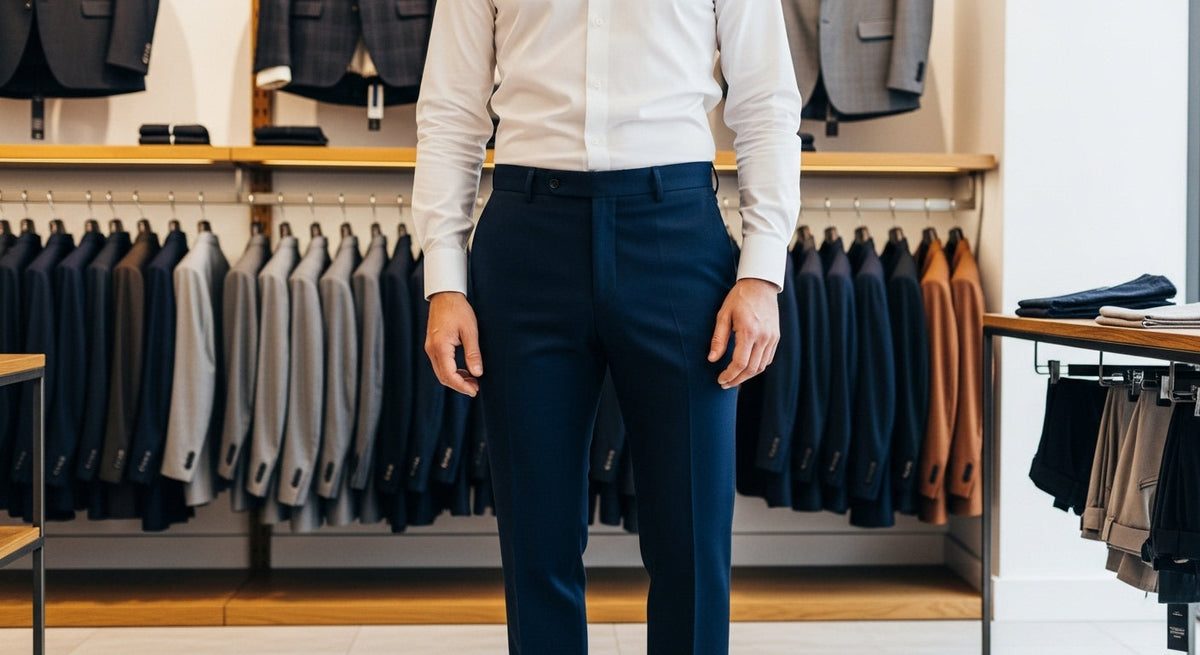
Master the Fit: Your Guide to Perfectly Tailored Pants
Key Takeaways:
- Rise height acts as a visual tool that can lengthen or shorten your appearance
- Shorter men should choose mid to high-rise pants with slim or tapered fits
- Men with muscular thighs need tapered, loose, or straight cuts with adequate thigh room
- Tall, broad men benefit from relaxed or tapered fits with mid to high-rise
- Low-rise pants can make average-height men appear shorter
- Proper alterations are essential style maintenance, not a weakness
- Different body types require specific approaches to achieve optimal proportions
Introduction to Finding the Right Pants for Your Body Type
Have you ever experienced that frustrating moment when you try on pants and they just don't look right? Too tight around the thighs, too loose at the waist, bunching at the ankles, or sitting awkwardly at your hips - the list goes on. You're not alone in this struggle, and more importantly, you're not the problem. The issue lies in the fact that most business suits and trousers are designed to fit thousands of different body types at once, which means they're not specifically tailored for your unique proportions.
Why do so many men settle for ill-fitting trousers when the solution is right in front of them? Understanding your body type and learning which pants work best for your specific build can transform not just how you look, but how you feel in your clothes. The right pair of custom trousers can visually lengthen your legs, balance your proportions, and create a silhouette that truly flatters your frame.
What makes the difference between pants that work and pants that don't? It comes down to understanding key factors like rise height, fit type, and how these elements interact with your body's natural proportions. Whether you're dealing with muscular thighs, a shorter stature, or a tall and broad frame, there's a specific approach that will work for your body type. The key is knowing which pants suit your unique build and why certain fits work better than others for different body proportions.

Understanding Pants Rise and Its Impact on Your Proportions
What exactly does "rise" mean when it comes to trousers, and why should you care about this seemingly technical detail? The rise refers to the distance between the crotch seam and the top of the waistband, and it's one of the most crucial factors in determining how your pants will look and feel. This measurement determines whether your trousers sit low on your hips, mid-level on your stomach, or high up at your natural waist.
Understanding rise is essential because it dramatically affects how your body proportions appear to others. Think of rise as a visual tool that can either work for you or against you. The right rise height can make your legs appear longer, your torso more balanced, and your overall silhouette more proportionate. Conversely, the wrong rise can compress your frame, make you look shorter, or throw off your body's natural balance.
How does rise function as a styling tool? A high-rise visually stretches your legs, especially when you tuck in your shirt slightly. This makes it perfect for men with shorter legs or longer torsos who want to create better balance. Mid-rise offers the safest option for most body types, sitting comfortably where it should without dramatic visual effects. Low-rise can help balance extremely long legs, but it requires careful consideration because it visually pulls your waist downward.
Why do so many men get this wrong? They often choose pants based on current trends rather than what works best for their body type. Low-rise pants might look fashionable, but on shorter or average-height men, they compress the silhouette and can make you appear several inches shorter. When selecting chinos or dress pants, always consider how the rise will interact with your specific proportions rather than following blanket fashion advice.

Best Pants Fits for Shorter Men Under 5'9"
Are you under 5'9" and struggling to find pants that don't overwhelm your frame? The solution lies in understanding which rises and fits work specifically for your proportions. Mid-rise and high-rise pants should become your go-to choices because they create the visual illusion of longer legs. This isn't about hiding your height - it's about optimizing your proportions to look your absolute best.
What fit styles work best for shorter men? Slim or slightly tapered fits are your most reliable options. These cuts follow your leg's natural line without adding unnecessary bulk that can make you appear even shorter. However, there's an important caveat here - avoid pants that are excessively wide because they'll swallow your frame whole. The goal is to find that sweet spot between fitted and overwhelming.
Why should you embrace alterations instead of avoiding them? Getting your pants shortened or rolling them up slightly isn't a sign of weakness or an admission that you can't find clothes that fit. It's proper style maintenance, just like getting your hair cut or maintaining your shoes. Budget an extra £15-30 for alterations depending on your location, and you'll never struggle with poorly fitting pants again. Most grey suits and trousers will need some adjustment to achieve the perfect length.
How can you avoid the most common mistakes shorter men make with pants? First, never let your trousers bunch up around your ankles - those folds will visually shrink your height. Second, don't be afraid of showing a bit of ankle or sock when sitting down. Third, remember that the right rise can add the appearance of several inches to your legs. When shopping for navy suits or casual trousers, always prioritize fit over trends.

How Different Rise Heights Affect Your Appearance
How can something as simple as where your pants sit on your waist completely transform your appearance? Each rise height creates distinct visual effects that can either enhance or detract from your natural proportions. Understanding these effects allows you to use rise strategically, like a visual slider that adjusts how others perceive your body shape.
What happens when you choose a low-rise fit? Low-rise pants visually pull your waist downward, which can be beneficial if you have exceptionally long legs that need balancing. However, for men of average height or shorter, this downward pull compresses your silhouette and can make you appear two inches shorter than you actually are. If you do opt for low-rise blue suits or casual pants, ensure they're not too tight, as this combination creates an unflattering look reminiscent of early 2000s fashion mistakes.
Why is high-rise so effective for certain body types? High-rise pants work like magic for men with shorter legs or longer torsos - the so-called "chair giant" proportions. When you wear high-rise trousers and tuck in your shirt slightly, you create an unbroken line that makes your legs appear significantly longer. This visual trick is particularly effective with flannel suits during cooler months when you want a more substantial, well-proportioned look.
When should you choose mid-rise pants? Mid-rise represents the safest option for most body types because it sits naturally at your waist without creating dramatic visual effects. If you're unsure about your proportions or new to understanding how rise affects your appearance, mid-rise stretch suits offer a reliable starting point. This rise height works particularly well for men with balanced proportions who don't need significant visual adjustments.

The Bulky Sprinter: Pants for Strong Muscular Thighs
Do you have powerful, muscular thighs packed into a shorter, more compact frame? This body type - what we call the "bulky sprinter" - presents unique challenges when it comes to finding well-fitting trousers. Your explosive leg power and athletic build require specific considerations that most off-the-rack pants simply don't accommodate.
What's the biggest mistake men with this body type make? Choosing slim-fit pants because they think it will make them look leaner. In reality, slim fits squeeze at the top, creating unflattering bunching, and crumple at the bottom, making you appear even shorter and stockier. The fabric fights against your natural build instead of working with it, creating tension lines and an overall uncomfortable appearance with pinstripes suits and casual trousers alike.
Which fits actually work for muscular thighs? You have three excellent options: tapered fits, loose fits, or timeless straight cuts. Tapered fits give your thighs the breathing room they need while narrowing towards the ankle, maintaining a sleek appearance without sacrificing comfort. Straight cuts provide a clean line from thigh to ankle, offering classic balance that neutralizes strong proportions. Loose fits offer spacious comfort throughout without any narrowing - perfect for maximum comfort and a relaxed aesthetic.
How should you handle the length and styling details? Your pants must have adequate room in the thigh area, and the hem shouldn't cling to your calves. Consider a looser hem or give them a casual roll to restore visual proportion and length. Most importantly, ensure your trousers aren't too long and bunching around your ankles - those folds will make you appear shorter. When shopping for brown suits or everyday trousers, prioritize thigh room over trendy slim cuts.

The Power Tower: Pants for Tall and Broad Body Types
Are you over six feet tall with a broad, athletic frame that makes finding well-fitting pants feel like an impossible task? The "power tower" body type - tall, strong, and built like a unit - comes with its own set of challenges when shopping for trousers. Despite having what many consider an ideal physique, you've probably experienced the frustration of trying on pants that look like they're one squat away from splitting open.
What's the solution for your powerful build? Relaxed fits and tapered fits with mid to high-rise should become your primary choices. Relaxed fits are cut wider and looser throughout, giving you the room you need to move comfortably, especially around your thighs and glutes. You won't feel squeezed or restricted, and the fabric won't strain against your natural proportions when you sit, walk, or move naturally throughout your day.
Why do tapered fits work so well for tall, broad men? Tapered fits can be excellent for your body type, provided the upper portion of the pants gives your legs adequate space. The key is finding tapered herringbone suits and trousers that don't compromise on thigh and hip room while still creating a refined silhouette towards the ankle. This combination gives you both comfort and style without sacrificing either element.
How can you overcome the mental adjustment to roomier fits? If you're accustomed to slim cuts, switching to roomier options might feel strange initially. However, the right pants shape creates balance in your silhouette and places visual weight where it should be. Think of it as working with your build rather than against it. When selecting black suits or casual trousers, remember that proper fit means the fabric should complement your frame, not fight it.
Custom Tailored Solutions for Every Body Type
Building the perfect wardrobe means understanding that one size never fits all, especially when it comes to trousers. We've seen how different body types require specific approaches to rise, fit, and styling, but what if you could skip the guesswork entirely? At Westwood Hart, we understand that your unique proportions deserve more than off-the-rack compromises.
Our custom tailoring process takes into account everything we've discussed - your rise preferences, fit requirements, and body type considerations. Whether you're the bulky sprinter who needs extra thigh room or the power tower requiring broader cuts, our online configurator allows you to design trousers that work specifically for your build. We offer precise measurements for rise height, thigh accommodation, and leg tapering to ensure your pants enhance rather than hide your natural proportions.
Why settle for alterations and adjustments when you can start with the perfect foundation? Our made-to-measure approach means your trousers will sit exactly where they should, with the right amount of room in all the right places. From selecting the perfect fabric weight to determining the ideal hem break, every detail is considered for your specific needs. Design your perfect pair today using our online configurator and experience how properly fitted trousers can transform not just your appearance, but your confidence.
Frequently Asked Questions
What's the difference between slim fit and tapered fit pants?
Slim fit pants are narrower throughout the entire leg, from thigh to ankle, while tapered fit pants offer more room in the thigh and hip area but narrow towards the ankle. Tapered fits work better for men with muscular thighs or athletic builds because they provide comfort where you need it most while maintaining a sleek appearance at the bottom.
How do I know if my pants rise is too low for my body type?
If your pants sit below your hip bones and make your legs appear shorter, the rise is likely too low for your proportions. Low-rise works best for very tall men with long legs, but most men benefit from mid to high-rise pants that sit at or slightly above the natural waist.
Should shorter men avoid cuffed pants?
Shorter men can wear cuffed pants, but the cuffs should be minimal - around 1 to 1.25 inches maximum. Large cuffs can visually cut your leg line and make you appear shorter. Plain hems or very small cuffs work better for men under 5'9".
What's the ideal pant length for different body types?
For shorter men, pants should hit at the top of your shoe with minimal to no break. Taller men can handle a slight break or even a full break without compromising their proportions. The key is avoiding excessive bunching around the ankles, which makes everyone look shorter.
Can muscular men wear slim fit pants?
Muscular men, especially those with strong thighs, should generally avoid true slim fits as they create tension and unflattering pulling across the thighs. Instead, opt for straight cut, tapered, or relaxed fits that accommodate your build while still looking tailored.
How important are alterations for achieving the right fit?
Alterations are essential for achieving proper fit, regardless of your body type. Even expensive, well-made pants rarely fit perfectly off the rack. Budget £15-30 for basic hemming and waist adjustments - it's an investment in looking your best and feeling confident in your clothes.